
How Missouri Courts Handle Criminal Cases
Missouri Circuit Courts are the trial courts that create state criminal case files. Missouri has 46 judicial circuits serving 114 counties and the independent City of St. Louis. Missouri circuit, associate circuit, and municipal divisions sit within that structure. Missouri associate circuit divisions commonly handle misdemeanors, serious traffic matters, and early felony proceedings. Missouri municipal divisions hear ordinance and traffic cases. Felony cases may start with a complaint and probable-cause statement, then move to a trial division after bind-over or indictment.
The Supreme Court of Missouri is the highest state court. Three Court of Appeals districts conduct most intermediate review. These Missouri appellate courts generate opinions, mandates, and appeal entries, but the originating Missouri Circuit Court remains the source of the trial file. The correct Missouri local record keeper is the Circuit Clerk, not the county clerk. A Missouri municipal case may instead require the municipal-division clerk. Missouri court records thus follow the court and division where the matter was filed.
Missouri Criminal Court Levels
The Missouri judiciary overview separates trial work from appellate review. That structure helps a searcher choose the right Missouri docket. A lower-level Missouri ordinance matter can remain in a municipal division, while a felony may gain a second number after it moves from associate circuit proceedings to the trial division. A Missouri appeal creates later entries without replacing the original case.
Court level also affects the words on a Missouri criminal record. A Missouri municipal ordinance is not the same as a state felony charge. A Missouri appellate mandate records review of a judgment rather than a new arrest. Match the Missouri court name, division, and case number before joining entries from different dockets.
| Court level | Criminal case role | Record path |
|---|---|---|
| Missouri Circuit Court | Original criminal jurisdiction and trial file | Case.net and Circuit Clerk |
| Missouri associate circuit division | Misdemeanors, specified traffic matters, and early felony stages | Case.net and Circuit Clerk |
| Missouri municipal division | Local ordinance and traffic cases | Case.net or municipal clerk |
| Missouri Court of Appeals | Most review from circuit judgments | Appellate docket and opinions |
| Supreme Court of Missouri | Highest review and specified constitutional categories | Supreme Court docket and opinions |
Note: A Missouri court level identifies where a record belongs, but the case number and division confirm the exact source file.
Running a Missouri Case.net Search
Missouri Case.net is the judiciary's statewide public case-information system. Missouri Case.net supports searches by litigant name, case number, filing date, and scheduled hearing. Missouri courts block automated or repetitive access. Search carefully, since names alone can produce false matches and confidential cases are excluded.
The judiciary's official Case.net instructions describe the Missouri public searches and case-tracking controls. Start broad only when needed. A known Missouri number is the strongest route, while court, year, and case-type filters make a Missouri name search more reliable.
- Choose the Litigant Name search when the Missouri case number is unknown.
- Enter the legal surname and first name, then narrow by Missouri court, filing year, and criminal case type.
- Open a candidate number and compare the Missouri Case Header, parties, court, filing date, and charge details.
- Read later Missouri docket and judgment entries before treating an original charge as the outcome.
- Ask the filing Missouri Circuit Clerk for a public terminal, missing document, or certified copy.
| Search | Field or control | Required | Use |
|---|---|---|---|
| Litigant Name | Last Name or Business Name | Primary field | Find Missouri cases without a number |
| Litigant Name | First Name | Optional | Narrow a common surname in Missouri |
| Litigant Name | Court, filing year, case type | Optional | Limit Missouri results by place, time, and record type |
| Case Number | Case number and court | Search alternative | Open a known Missouri case |
| Scheduled Hearings | Court and date controls | Varies | View a Missouri court calendar, not custody |
Reading Missouri Criminal Court Dockets
A Missouri criminal docket is a timeline, not a verdict list. Early entries can show a complaint, warrant, initial appearance, counsel appointment, preliminary hearing, or bind-over. Later entries may record an information or indictment, plea, motions, trial, judgment, sentence, probation order, revocation, or appeal. The most recent controlling entry matters. A charge shown near the start remains an accusation unless the judgment records guilt.
Several Missouri terms carry special weight. A Missouri SIS means suspended imposition of sentence, so the court withholds a sentence while probation is served. A Missouri SES means the court imposes a sentence but suspends its execution. Nolle prosequi records a Missouri prosecutor's choice not to continue a charge at that time. A dismissal and an acquittal are also distinct outcomes. Reading these entries in sequence prevents a Missouri court case lookup from turning an old allegation into a false claim of conviction.
- Disposition
- The recorded outcome of a charge, such as conviction, dismissal, acquittal, or nolle prosequi.
- Bind-over
- The move of a felony matter beyond preliminary proceedings for further action in the trial division.
- Capias
- A court writ directing that a person be taken into custody, often shown as a docket event.
- Restitution
- Court-ordered payment for qualifying victim loss.
Note: Missouri docket terms describe procedural events, so read the later judgment before deciding how any listed charge ended.
What a Missouri Case File Contains
A public Missouri case file can combine case-header data, party and attorney details, docket events, charges, hearings, judgments, financial entries, and accessible documents. Not every case contains every field. Protected identifiers are redacted, and remote document access depends on the record's security setting. A hyperlink signals an attachment and public access; no link can mean that no attachment exists or that the document is not available remotely.
Use the Missouri header to confirm identity and jurisdiction, then move to the charges and latest disposition. Missouri scheduled hearings show what may happen next, not what already occurred. Financial balances can include fines, costs, or restitution, but they do not replace the Missouri judgment and sentence entries.
| Case Header | Case number and style, filing date, court, division, type, judge, status, and disposition date. |
|---|---|
| Parties & Attorneys | State and defendant roles, prosecutor and defense counsel, and appearance dates. |
| Docket Entries | Filed papers, warrants or summonses, hearings, pleas, motions, judgment, sentence, and later events. |
| Charges | Count, offense text, statute or charge code, class, date, agency, plea, and outcome. |
| Hearings | Event type, date, time, judge, division, location, and rescheduling status. |
| Documents | Public complaints, informations, motions, orders, judgments, or sentences where access permits. |
Missouri Case Files Versus Rap Sheets
Case.net is not the Missouri Central Repository. A court file documents one judicial matter in its filing court. A rap sheet compiled by MSHP CJIS links reportable arrest cycles, charges, dispositions, and correctional events to an identity. The court file may show motions and documents that never belong on a rap sheet. The repository may combine reportable events from several counties.
Missouri law requires courts and other criminal-justice bodies to report defined history information to the repository. A clerk's later disposition should close the arrest cycle. Yet reporting or identity matching can be incomplete. When a Case.net judgment and a personal MSHP CJIS record disagree, obtain a certified disposition from the Circuit Clerk and use the official record-challenge channel. The MSHP CJIS criminal history check serves a different purpose and does not replace the court's source file.
Case-to-record flow: County filing › Missouri court judgment › clerk disposition report › MSHP CJIS rap sheet
Missouri Criminal Case Stages
A Missouri criminal case may begin with an investigation, arrest, summons, or warrant. A complaint and probable-cause statement can lead to an initial appearance. A felony can then move through a preliminary hearing or waiver and bind-over, or begin through grand-jury indictment. The prosecutor files an information or indictment, and arraignment supplies the formal plea.
Discovery, motions, conferences, and plea talks follow. If the matter does not end by plea or dismissal, a jury or judge decides the trial. A judgment may lead to jail, prison, probation, a fine, restitution, or other terms. Later probation, revocation, post-conviction, and appeal events can change the docket. Missouri criminal case records must therefore be checked through the last entry, not stopped at the first charging screen.
Case flow: Charges Filed › Arraignment › Pretrial › Plea or Trial › Disposition › Sentencing
Note: Missouri criminal cases can end before trial, and later revocation or appeal entries may change the record after sentencing.
Missouri Court Documents Offscreen
Remote public document access expanded in Missouri in 2023, but security rules still control each attachment. Juvenile matters, sealed or expunged files, grand-jury material, some unserved warrant material, protected victim data, presentence reports, and other confidential content do not become public merely because a related case header exists. Certain dismissed cases and successfully completed SIS matters can also move to confidential security.
The Missouri File Viewer guidance confirms that courthouse access can differ from remote access. A public terminal may show a public document that lacks an online link. Older records may be paper, microfilm, archived, or stored in a legacy system. Ask the Circuit Clerk about inspection and copy options using an exact case number and document name.
The Missouri Attorney General's Sunshine Law materials describe request routing and custodian duties.
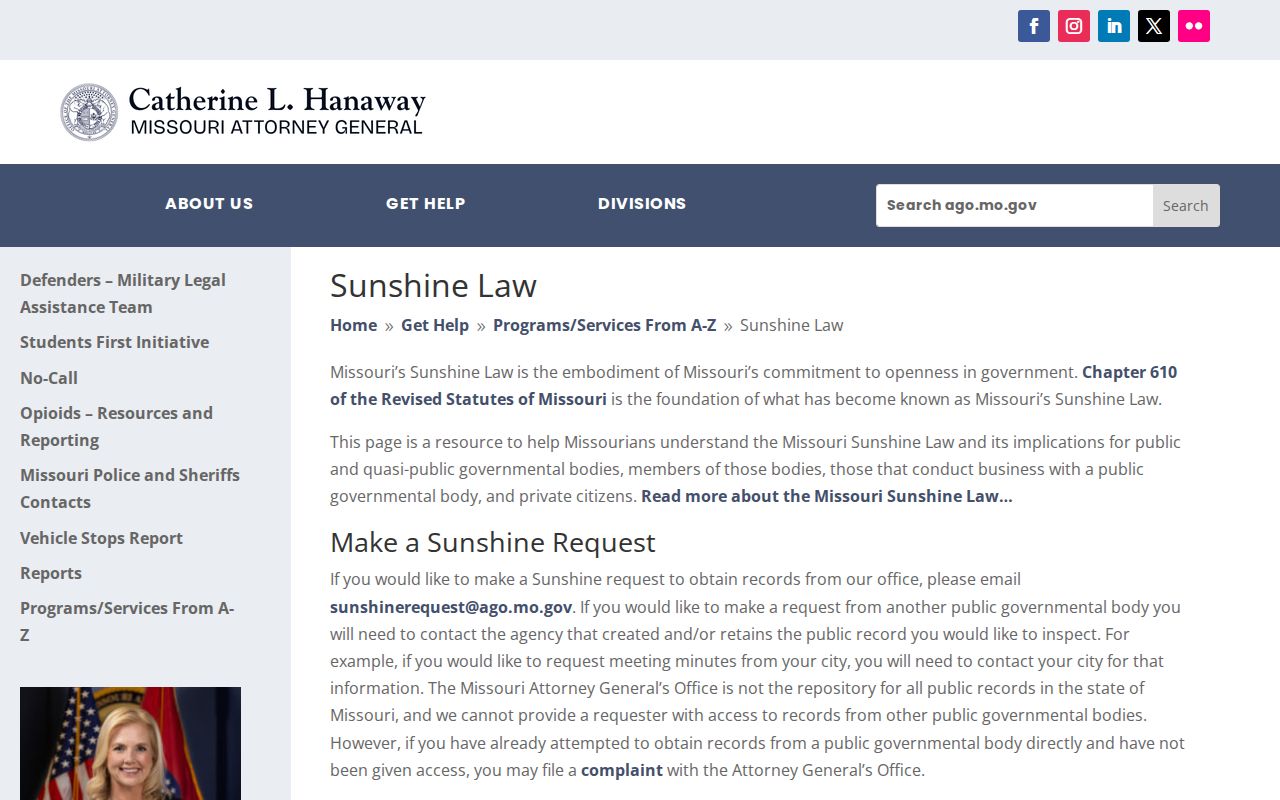
The official guidance reinforces a key point: send a record request to the public body that keeps the record, not to a central statewide warehouse.
Tracking Missouri Court Case Changes
Eligible Case.net records offer Track This Case from the Case Header. The process uses an email address, confirmation, a verification code, and a character challenge. It can notify a reader about later court events, but it does not turn the user into a party and does not guarantee access to a confidential filing. Fine Collection Center matters are not eligible.
Tracking is most useful when a Missouri court case remains pending or when a sentencing, probation, or appeal event may follow. Still, direct verification remains vital before relying on a schedule. Hearings can be continued or canceled. Case.net can also be interrupted for maintenance. The filing clerk can confirm the live calendar and explain whether a document is available online, at a terminal, or by a copy request.
Note: A Missouri tracking alert reports docket activity but does not certify a hearing time, judgment, or document's public status.
County Sources for Missouri Case Records
The authoritative Missouri trial file stays with the Circuit Clerk for the filing county or independent city. That office can identify archived material, explain local copy charges, and issue plain, certified, or authenticated copies. A municipal ordinance record may require the municipal clerk. Federal criminal cases are separate and belong in PACER through Missouri's Eastern or Western U.S. District Court, not Case.net.
A representative Missouri circuit criminal-record office shows the local clerk route from Case.net discovery to document access.
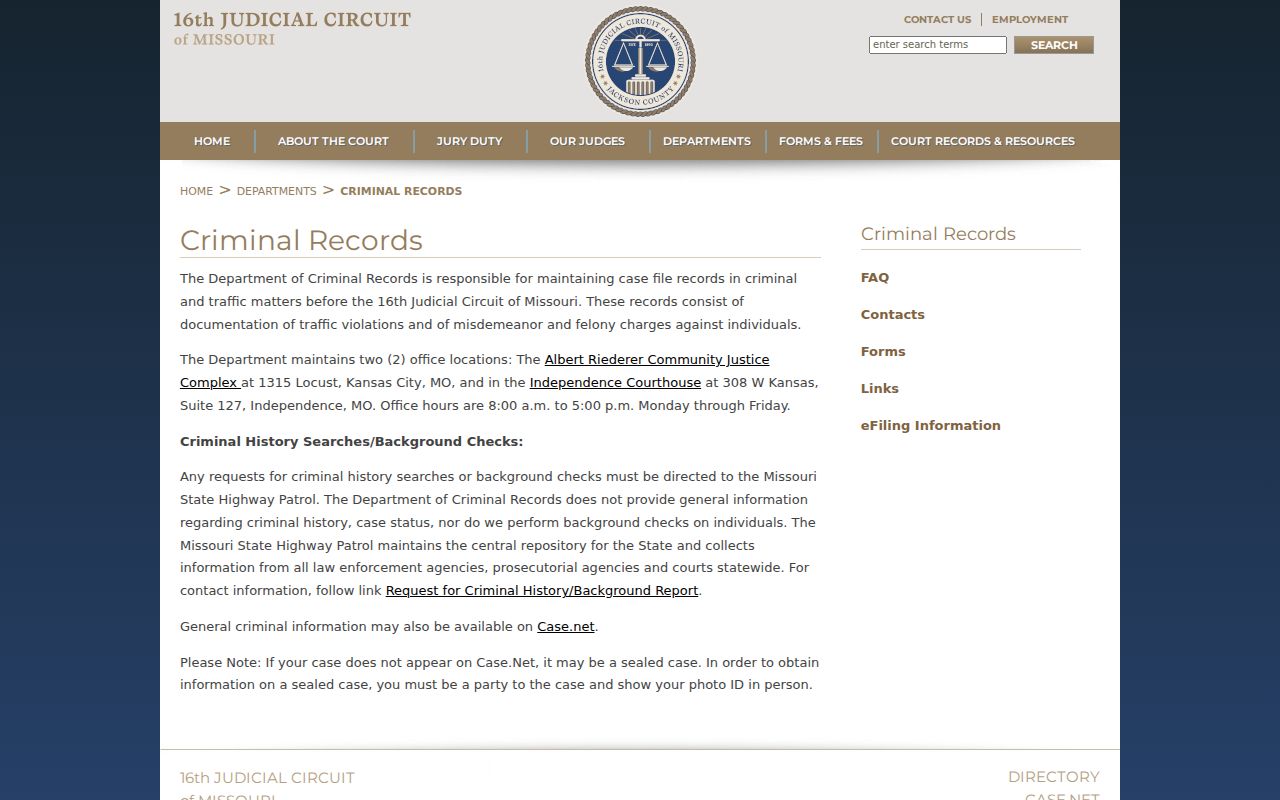
The local office pattern matters statewide because a public docket summary and the clerk's full source file are not interchangeable.
Use the Browse Counties directory for all 115 Missouri county and city jurisdictions to reach the correct local criminal-record site.